
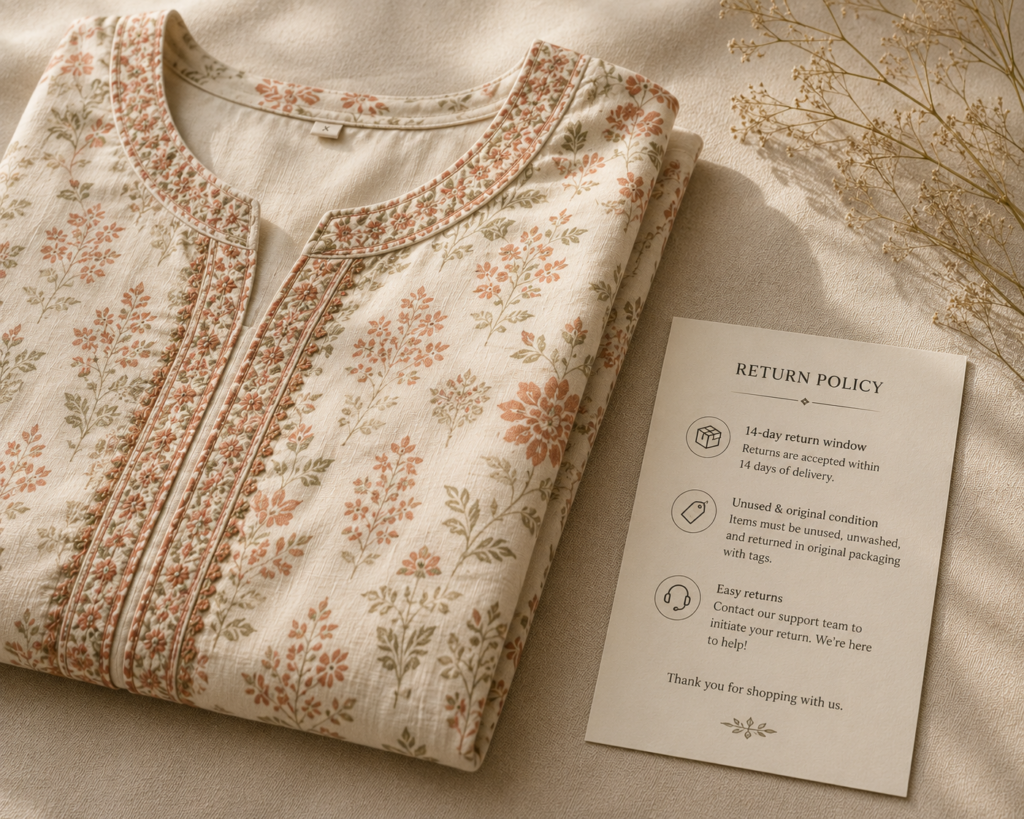
Return policies read like fine print until you actually need one, and by then it’s too late to negotiate. Here’s what to look for before you buy, not after.
The Real Questions a Policy Should Answer
A genuinely fair return policy tells you the return window in days, exactly what condition items need to be in, and whether you’re paying for return shipping. Vague language like “returns accepted” without those specifics usually means the details favor the seller more than the customer.
What a Reasonable Policy Looks Like
| Element | Fair Standard |
|---|---|
| Return window | At least 14-30 days from delivery |
| Condition required | Unworn, unwashed, tags attached |
| Refund method | Clearly stated, original payment or store credit |
| Exceptions | Clearly listed, not buried in separate terms |
Why Exceptions Matter More Than the Headline Policy
A 30-day return window means very little if the exceptions list quietly excludes half your likely purchases. Sale items, perfumes, and made-to-order pieces are common, reasonable exceptions, since they carry real practical reasons behind them. What’s worth watching for is a policy that excludes broad categories without explaining why, which usually signals the return window is more marketing than substance.
International Orders Change the Calculation
Return shipping costs from another country can be significant, sometimes enough to make a return impractical even when it’s technically allowed. It’s worth checking whether a seller covers return shipping for international customers or expects you to absorb that cost, since that detail changes how much the policy actually protects you in practice.
Reading Between the Lines
- A policy with no stated timeframe at all is a signal to ask directly before ordering
- Store credit only, no refunds is worth knowing in advance, especially for a first purchase from an unfamiliar brand
- A responsive support contact listed alongside the policy suggests a seller who actually handles returns, not just publishes a policy page
Frequently Asked Questions
Is a 30-day return window standard for online clothing purchases?
It’s a common and reasonable standard, though it varies by seller. Anything under 14 days is worth noting, especially for international orders where shipping time alone can eat into the window.
Should sale items always be excluded from returns?
Not necessarily, but it’s a common exception. What matters is whether the exclusion is clearly stated before you buy, not discovered afterward.
Who typically pays for return shipping on international orders?
This varies significantly by seller. It’s worth checking directly if it’s not stated clearly, since the cost can be substantial for international returns.
Read Shanzay B’s full Returns policy, or browse the full collection, with worldwide shipping and Cash on Delivery available.